Showing posts with label nonfiction friday. Show all posts

Friday, September 3, 2021

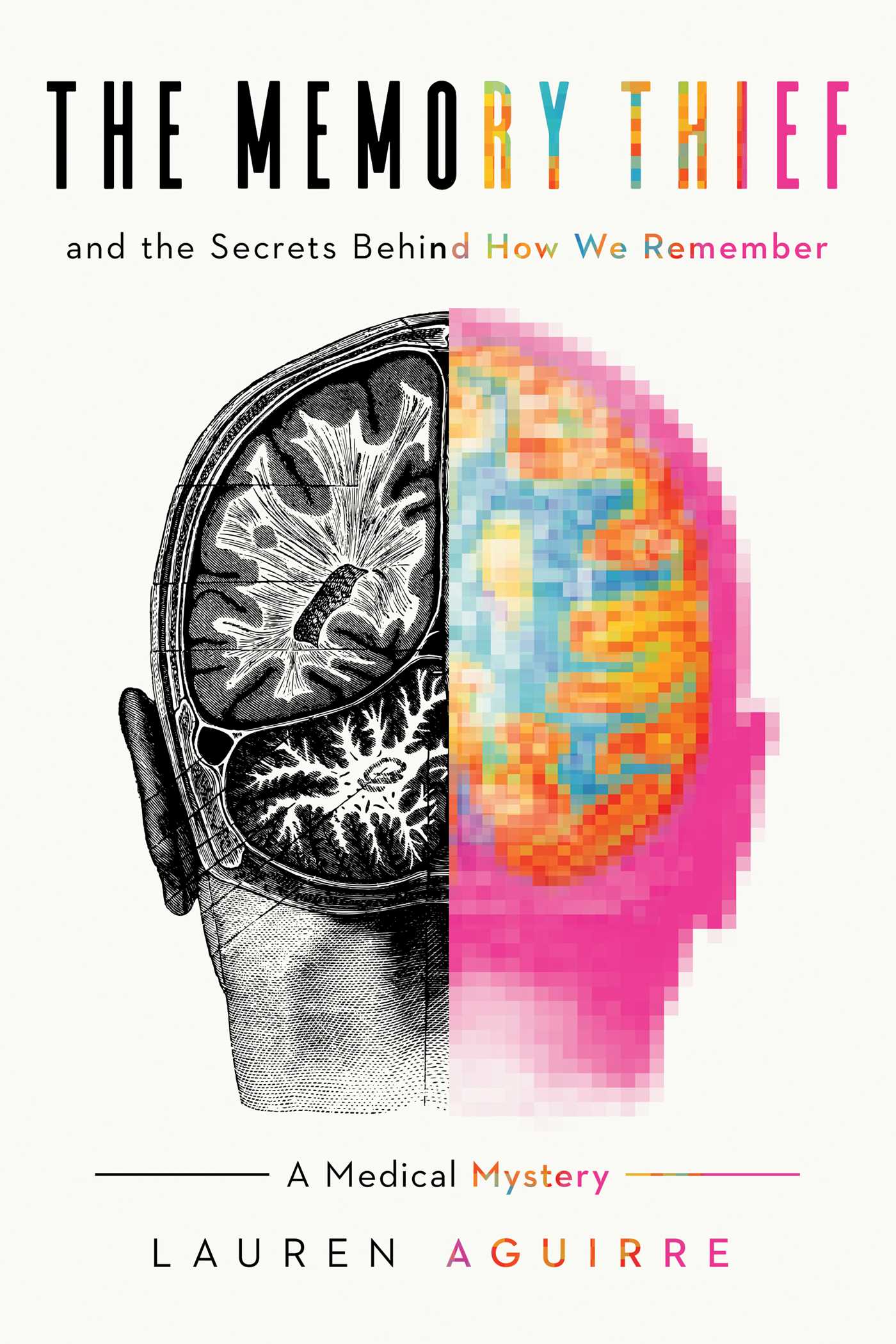
Book Review: The Memory Thief and the Secrets Behind How We Remember by Lauren Aguirre


The Memory Thief and the Secrets Behind How We Remember by Lauren Aguirre
Published: June 1st, 2021 by Pegasus Books
Genre: Nonfiction, Science
Format: Hardcover, 336 pages, library
Rating: 4 stars

Publisher's Summary:

The remarkable true story of a team of doctors who – through years of scientific sleuthing and observant care—discover a surprising connection between opioids and memory, one that holds promise and peril for any one of us.

How could you lose your memory overnight, and what would it mean? The day neurologist Jed Barash sees the baffling brain scan of a young patient with devastating amnesia marks the beginning of a quest to answer those questions. First detected in a cluster of stigmatized opioid overdose victims in Massachusetts with severe damage to the hippocampus—the brain’s memory center—this rare syndrome reveals how the tragic plight of the unfortunate few can open the door to advances in medical science.

After overcoming initial skepticism that investigating the syndrome is worth the effort—and that fentanyl is the likely culprit—Barash and a growing team of dedicated doctors explore the threat that people who take opioids chronically as prescribed to treat severe pain may gradually put their memories at risk. At the same time, they begin to grasp the potential for this syndrome to shed light on the most elusive memory thief of all—Alzheimer’s disease.

Through the prism of this fascinating story, Aguirre goes on to examine how researchers tease out the fundamental nature of memory and the many mysteries still to be solved. Where do memories live? Why do we forget most of what happens in a day but remember some events with stunning clarity years later? How real are our memories? And what purpose do they actually serve?

Perhaps the greatest mystery in The Memory Thief is why Alzheimer’s has evaded capture for a century even though it afflicts tens of millions around the world and lies in wait for millions more. Aguirre deftly explores this question and reveals promising new strategies and developments that may finally break the long stalemate in the fight against this dreaded disease.

But at its core, Aguirre’s genre-bending and deeply-reported book is about paying attention to the things that initially don’t make sense—like the amnestic syndrome—and how these mysteries can move science closer to an ever-evolving version of the truth.

My Thoughts:

Lauren Aguirre weaves the story of how a group of doctors look into a connection between opioid use and abuse and memory loss. We follow along with each and every doctor who saw something wasn't right and started to make connections and reach out. We also follow along with Owen, a man who'd life has been completely upended because of his amnesia.

It's also a crash course into how how brain makes memories and what happens when our brains don't do that anymore...the tale takes us to degenerative diseases like Alzheimer's and dementia and the possible genetic predispositions they may be there. And why are some brains more susceptible to hippocampus damage on opioids and not others?

To me it's also a story on the ingenuity of science, our brains, and scientists and doctors who keep it all going.

I really enjoyed following along with each doctor as they came to new insights and shared it with others. The science behind what they're doing and where it still needs to go. Also, Owen. Man. I cannot even imagine what he has to deal with every minute of every day. We get to see what he does to function without a brain able to hold onto memories!

Aguirre, even provides a few tips from the doctors to keep our brains healthy...sleep, consistent exercise, and eternal optimism and gratitude for the little things. I mean, we know this but it's backed by science! Science is good. Science is wise. Follow science.

Friday, June 11, 2021

Nonfiction Reviews: Jane Austen: A Life...


Jane Austen: a Life by Claire Tomalin

Published: 1997
Genre: Non-fiction, history, biography
Format: Hardcover, 347 Pages, Own
Rating: 4 stars

Publisher's Summary:

At her death in 1817, Jane Austen left the world six of the most beloved novels written in English—but her shortsighted family destroyed the bulk of her letters; and if she kept any diaries, they did not survive her.  Now acclaimed biographer Claire Tomalin has filled the gaps in the record, creating a remarkably fresh and convincing portrait of the woman and the writer. 

While most Austen biographers have accepted the assertion of Jane's brother Henry that "My dear Sister's life was not a life of events," Tomalin shows that, on the contrary, Austen's brief life was fraught with upheaval.  Tomalin provides detailed and absorbing accounts of Austen's ill-fated love for a young Irishman, her frequent travels and extended visits to London, her close friendship with a worldly cousin whose French husband met his death on the guillotine, her brothers' naval service in the Napoleonic wars and in the colonies, and thus shatters the myth of Jane Austen as a sheltered and homebound spinster whose knowledge of the world was limited to the view from a Hampshire village. 

My Thoughts:

I picked this one up earlier this year after I listened to a Great Courses lecture series on Jane Austen and her world and her books. I'm so glad I did. I learned so much about her family, especially her parents and her relationship to her sister and her brothers.

Her parents sent the older children away after they were born to local poor families to take care of them until they were old enough to not be such a nuisance in the house. Tomalin speculates Jane ended up not having a great relationship with her mother due to this early arrangement.

She spends a few chapters talking about her books and how things in her life and the people in it may have influenced her writing. Having Tomalin bring it all together really astounds me at what a genius Jane Austen was. There were years where she didn't really have a home after her father died and her and Cassandra were moved around from brother to brother and their families to help take care of children, etc. Yet she still found the time even through all of that to write works of genius.

But it's a tragedy as well. After her death, many of her letters were destroyed or lost even after decades of keeping some in tact. Her niece Fanny destroyed a huge bundle of her correspondence with her brother Henry. And she died too young. 


The Self-Driven Child: the Science and Sense of Giving Your Kids More Control Over Their Lives by William Stixrud and Ned Johnson
Published: February 18, 2018
Genre: Parenting, Nonfiction
Format: Kindle, 384 pages, Own
Rating: 5 Stars

Publisher's Summary:

A few years ago, Bill Stixrud and Ned Johnson started noticing the same problem from different angles: Even high-performing kids were coming to them acutely stressed and lacking any real motivation. Many complained that they had no control over their lives. Some stumbled in high school or hit college and unraveled. Bill is a clinical neuropsychologist who helps kids gripped by anxiety or struggling to learn. Ned is a motivational coach who runs an elite tutoring service. Together they discovered that the best antidote to stress is to give kids more of a sense of control over their lives. But this doesn't mean giving up your authority as a parent. In this groundbreaking book they reveal how you can actively help your child to sculpt a brain that is resilient, stress-proof and ready to take on new challenges.

The Self-Driven Child offers a combination of cutting-edge brain science, the latest discoveries in behavioral therapy, and case studies drawn from the thousands of kids and teens Bill and Ned have helped over the years to teach you how to set your child on the real road to success. As parents, we can only drive our kids so far. At some point, they will have to take the wheel and map out their own path. But there is a lot you can do before then to help them find their passion and tackle the road ahead with courage and imagination.

My Thoughts:

Stixrud and Johnson carefully take us through each step and the science behind these steps of allowing our kids to be their own decision makers and how we as parents can be in the role of the "consultant."

There's a chapter on homework that I absolutely loved! Especially during the pandemic and homework was something that was a sore spot for awhile. But once I read this chapter I was able to sit down and talk with G and help him decide how and when he wanted to get it done. It ended up being his choice and his schedule. And the last half of the school year went was heaven. G gained a lot more confidence on how to work homework into his schedule. He also learned how to ask for help when he truly needed it and he also decided where he wanted to put his effort and which assignments weren't quite worth it compared to others.

He also talks about stress--"It's as minor as feeling unbalanced and as major as fighting for your life." Sonia Lupien from the Centre for Studies on Human Stress has an acronym to help sum up what makes life stressful--N.U.T.S. Novelty, Unpredictability, Threat to the ego, and Sense of control.

Sense of control really stuck with me. As individuals we don't have a lot of it but how is our sense of control? They say..."if you have confidence that you can impact a situation, it will be less stressful. In contrast, a low sense of control may very well be the most stressful thing in the universe." This whole book is on how we give that high sense of confidence to our kids so they can feel like they have some sense of control over how their lives will go.

This is probably the best parenting book I've read since I was pregnant or right after G was born. I highly recommend it if you're a parent, if you work with kids, if you're a human because these are skills I didn't learn as a kid either and are helping me now!

Saturday, November 7, 2020

Mini Book Reviews: What Language Is, Lies My Teacher Told Me


What Language Is: And What it Isn't and What It Could Be by John McWhorter
Published: August 4th, 2011 by Gotham Books
Genre: Nonfiction, Language
Format: Hardcover, 228 Pages, Own
Rating: 4 stars

My Thoughts:

McWhorter takes us through the crazy and the zany of language. He talks a lot about how languages tha are learned by adults because of conquering/colonization, etc, and that are then passed down to their children will inevitably become more simplified as time goes on. Languages that are not usually learned by adults tend to stay really difficult to outsiders. Makes sense but you don't really think about it until he talks about it. He gives tons of examples from around the world. McWhorter really shines when it comes to pidgins and creoles; how they are formed and how they stick around.

Linguistics is my jam and I love reading more about it when I can. My only complaint (and to be fair he acknowledges this in the book) is that his writing style is like he was giving a speech or a lecture in class. It's very oral. So maybe listen to it rather than read it. I also love his Great Courses classes and this book feels just like one of those!

Languages are messy, just like humans, which makes them so much fun to study and learn about!


Lies My Teacher Told Me: Everything Your High School History Textbook Got Wrong by James Loewen 
Published: October 14th, 1995 by Gotham Books
Genre: Nonfiction, History
Format: Paperback, 464 Pages, Own
Rating: 5 stars

My Thoughts:

This is a fantastic look at how history is taught/has been taught in the U.S. Loewen takes us through some big myths of U.S. history from Thanksgiving and Christopher Columbus to recent history like the Vietnam War and 9/11. He also explains how America itself is a mythical figure and how our history we learn in high school is a myth-making, bland, and inaccurate history. To be informed citizens we need to know our history. We can't make change unless we know where we've come from in order to see where we need to go.

This was released 25 years ago when I was in high school. I can vouch that my history textbooks did not teach accurate history. It was bland and boring and inaccurate. I didn't start on my journey of learning more accurate history until about 2010. So it's been a fast and furious crash course. I have learned about some of these things in other ways but the thing that's so fantastic about this book is it's all together. History does come alive in his hands and I wish we could come together as a country and really face our history, learn, and learn from and continue to grow.

This is a must-read book in high school and beyond.

Friday, October 9, 2020

Nonfiction November 2020


It's that time of year again! Nonfiction November. And...this is the first year I'm actually planning ahead and thinking, actually thinking, about what I'm going to do! Yay! Me!

Nonfiction November will take place from November 2-30th and be hosted by Katie @ Doing Dewey, Rennie @ What's Nonfiction, Julie @ Julz Reads, and Leann @ Shelf Aware.

Here's the all the info:

We’ll be using the #NonficNov hashtag to share our weekly discussion posts starting November 2nd. The Instagram challenge is returning too, with details to come. We’d appreciate sign-up posts or tweets to help spread the word, but they’re not required. Join us as you like and at your own pace 🙂 We’ll have link-ups every week, where you can share any responses you write for the discussion prompts or nonfiction reviews you post during the month. And without further ado, here’s the discussion prompt schedule:

Week 1: (Nov. 2 to Nov. 6) – Your Year in Nonfiction (Leann of Shelf Aware): Take a look back at your year of nonfiction and reflect on the following questions – What was your favorite nonfiction read of the year? Do you have a particular topic you’ve been attracted to more this year? What nonfiction book have you recommended the most? What are you hoping to get out of participating in Nonfiction November?

Week 2: (Nov. 9 to 13) – Book Pairing (Julz of Julz Reads): This week, pair up a nonfiction book with a fiction title. It can be a “If you loved this book, read this!” or just two titles that you think would go well together. Maybe it’s a historical novel and you’d like to get the real history by reading a nonfiction version of the story.

Week 3: (Nov. 16 to 20) – Be The Expert/Ask the Expert/Become the Expert (Rennie of What’s Nonfiction): Three ways to join in this week! You can either share 3 or more books on a single topic that you have read and can recommend (be the expert), you can put the call out for good nonfiction on a specific topic that you have been dying to read (ask the expert), or you can create your own list of books on a topic that you’d like to read (become the expert)

Week 4: (Nov. 23 to 27) – New to My TBR (Katie at Doing Dewey): It’s been a month full of amazing nonfiction books! Which ones have made it onto your TBR? Be sure to link back to the original blogger who posted about that book.

Wednesday, September 2, 2020

Begin Again: James Baldwin's America and Its Urgent Lessons for Our Own by Eddie S. Glaude Jr.

2020-08-26 11.00.52
Begin Again: James Baldwin's America and Its Urgent Lessons for Our Own by Eddie S. Glaude Jr.
Published: April 21st, 2020 by Crown Publishing Group (NY)
Genre: Nonfiction, History, Current Events
Format: Kindle, 272 Pages, Own
Rating: 5 stars

My Thoughts:

Eddie S. Glaude Jr. writes a much-needed book on how we can begin again and keeping moving forward despite all the steps back. And what better way to do this than with the words and life of James Baldwin.

James Baldwin "...saw, and felt deeply, the effects of America's betrayal of the black freedom struggle of the mid-twentieth century: The country had refused once again, to turn its back on racism and to reach for its better angels..." And here the country sits at the brink do we refuse once again to learn about the foundations of this country? Do we refuse to acknowledge and the cries of Black people and people of color, for their cries of acknowledgement and change? "A moral reckoning is upon us, and we have to decide, once and for all, whether or not we will truly be a multiracial democracy."

Glaude takes us on his journey as he thinks about Baldwin's life and works. It's a bit memoir, biography, and literary criticism and history all rolled into one. The pain is real as we see major steps forward and huge reckoning starting with the civil rights movement of the mid-twentieth century but how once again America turns its back on learning and growing and reconciliation. We end up getting Nixon and Reagan and major steps back with the war on drugs and mass incarceration, which has disproportionately affected Black Americans and people of color.

"Revealing the lie at the heart of the American idea, however, occasions an opportunity to tell a different and better story...Not everything his lost. Responsibility cannot be lost, it can only be abdicated. If one refuses abdications, one begins again."

And thus how Glaude takes us through Baldwin's America (which is our America) and his hopes, despair, and reconciliation with America then and how we can like Baldwin did begin again.

Through his book I've also discovered more insights into Baldwin than I ever thought I could know. More of his writings, interviews, documentaries about him, letters, and journals dedicated to analyzing everything he wrote was brought to my attention. Can't wait to dive in.

Friday, May 29, 2020

Mini Book Reviews: Nonfiction: Freedom Is a Constant Struggle, Invincible Microbe, Spillover...

Here's the nonfiction I've read over the last couple of months...


Freedom Is a Constant Struggle: Ferguson, Palestine, and the Foundations of a Movement by Angela Y. Davis
Published: August 17th, 2015 by Haymarket Books
Genre: Nonfiction, Essays, Memoir
Format: Audible, 5 Hours and 47 minutes, Own
Rating: 4 stars

Publisher's Summary:

In these newly collected essays, interviews, and speeches, world-renowned activist and scholar Angela Y. Davis illuminates the connections between struggles against state violence and oppression throughout history and around the world.

Reflecting on the importance of black feminism, intersectionality, and prison abolitionism for today's struggles, Davis discusses the legacies of previous liberation struggles, from the Black Freedom Movement to the South African anti-Apartheid movement. She highlights connections and analyzes today's struggles against state terror, from Ferguson to Palestine.

Facing a world of outrageous injustice, Davis challenges us to imagine and build the movement for human liberation. And in doing so, she reminds us that "Freedom is a constant struggle."

My Thoughts:

Excellent. I loved listening to Ms. Davis. I saw her do a lecture/Q&A at a local university a few years ago when this came out. I loved hearing her story. We have a long way to go. The main thing I got besides freedom is a constant struggle, was how we need to understand the global perspective and how it all affects us. Global movements are our movements. Our circle of empathy needs to stretch globally.

My only complaint with the audio book version is it was hard to follow Ms. Davis in the interview transcripts. She read both the interviewer and herself and it was very difficult to figure out who and what while listening.

And there is nuance with the Israeli and Palestinian conflict that she didn't discuss. But I understand that wasn't the focus of the essay or speech she used.

Overall, a fantastic collection of her thoughts and ideas. She's very inspiring.


Invincible Microbe: Tuberculosis and the Never-ending Search for a Cure by Jim Murphy
Published: July 12th, 2012 by Houghton Mifflin Harcourt
Genre: Nonfiction, Science, History, Medicine
Format: Paperback, 160 Pages, Own
Rating: 4 stars
Publisher's Summary:

This is the story of a killer that has been striking people down for thousands of years: tuberculosis. After centuries of ineffective treatments, the microorganism that causes TB was identified, and the cure was thought to be within reach—but drug-resistant varieties continue to plague and panic the human race.

The “biography” of this deadly germ, an account of the diagnosis, treatment, and “cure” of the disease over time,and the social history of an illness that could strike anywhere but was most prevalent among the poor are woven together in an engrossing, carefully researched narrative. Bibliography, source notes, index.

My Thoughts:

I read this out loud with G. I wanted to learn with him more about germs and how tuberculosis was brought under control with antibiotics. But I did not know that tuberculosis was still a force to be reckoned with. There are super resistant strains that need to be killed with ever-more powerful antibiotics. It's a devastating disease. It was a great summary for kids and teens and people in general who don't know a lot about tuberculosis and its lasting devastation.


Spillover: Animal Infections and the Human Pandemic by David Quammen
Published: September 24th, 2012 by W.W. Norton Company
Genre: Nonfiction, Science, Medicine
Format: Kindle, 592 Pages, Own
Rating: 5 stars

Publisher's Summary:

Ebola, SARS, Hendra, AIDS, and countless other deadly viruses all have one thing in common: the bugs that transmit these diseases all originate in wild animals and pass to humans by a process called spillover. In this gripping account, David Quammen takes the reader along on this astonishing quest to learn how, where from, and why these diseases emerge and asks the terrifying question: What might the next big one be? 

My Thoughts:

Well, we know what the next one is... a coronavirus SARS-COV-2 and its disease Covid-19. He talks about SARS in the early portions of the book. I actually started this one the weekend we started quarantining. Talk about surreal.

Quammen is a fantastic science writer. He actually travels around the world and talks to the scientists and epidemiologists involved with each of these diseases. He talks about his experiences and uses those to talk about the topic at-hand. I learned so much about AIDS and HIV and where it probably first made spillover in the early 1900s and where and why.

"Zoonosis is an animal infection transmissible to humans. Pondering them as a group tends to reaffirm the old Darwinian truth (the darkest of his truths, well known and persistently forgotten) that humanity is a kind of animal, inextricably connected with other animals: in origin and in descent, in sickness and in health."

"Make no mistake, they are connected, these disease outbreaks coming one after another. And they are not simply happening to us; they represent the unintended results of things we are doing. They reflect the convergence of two forms of crisis on our planet... first crisis is ecological, the second is medical.

Human-caused ecological pressures and disruptions are bringing animal pathogens ever more into contact with human populations, while human technology and behavior are spreading those pathogens ever more widely and quickly."

The rest of the book delves into detail how and why we are doing this and how we are our own worst enemies if we don't do more to change our ways.


Pale Rider: The Spanish Flu of 1918 and How it Changed the World by Laura Spinney
Published: June 1st, 2017 by PublicAffairs
Genre: Nonfiction, Science, Medicine, History
Format: Paperback, 352 Pages, Own
Rating: 4 stars

Publisher's Summary:

In 1918, the Italian-Americans of New York, the Yupik of Alaska and the Persians of Mashed had almost nothing in common except for a virus--one that triggered the worst pandemic of modern times and had a decisive effect on the history of the twentieth century.
The Spanish flu of 1918-1920 was one of the greatest human disasters of all time. It infected a third of the people on Earth--from the poorest immigrants of New York City to the king of Spain, Franz Kafka, Mahatma Gandhi and Woodrow Wilson. But despite a death toll of between 50 and 100 million people, it exists in our memory as an afterthought to World War I.
In this gripping narrative history, Laura Spinney traces the overlooked pandemic to reveal how the virus travelled across the globe, exposing mankind's vulnerability and putting our ingenuity to the test. As socially significant as both world wars, the Spanish flu dramatically disrupted--and often permanently altered--global politics, race relations and family structures, while spurring innovation in medicine, religion and the arts. It was partly responsible, Spinney argues, for pushing India to independence, South Africa to apartheid and Switzerland to the brink of civil war. It also created the true "lost generation." Drawing on the latest research in history, virology, epidemiology, psychology and economics, Pale Rider masterfully recounts the little-known catastrophe that forever changed humanity.

My Thoughts:

This just touches on the history of the Spanish Flu through various parts around the world that dealt with it. We get the U.S., the frontlines of war in France, China, Brazil, etc. She talks about three or four possible scenarios of where the spillover happened and how it could have spread and why. The last section focuses on how it changed the world culturally. How did artists and writers and architects change after surviving and experiencing this devastating pandemic?

It's very short on the ground. It doesn't focus on any one country but just small parts everywhere. But I appreciated the jump from place to place and a story or two to humanize it. There are so many books on the Spanish Flu that I'm sure I'll find one to go into more detail.


Our Magnificent Bastard Tongue: The Untold History of English by John McWhorter
Published: October 1st, 2008 by Gotham Books
Genre: Nonfiction, Language, History
Format: Kindle, 230 Pages, Own
Rating: 4 stars

Publisher's Summary:

A survey of the quirks and quandaries of the English language, focusing on our strange and wonderful grammar

Why do we say "I am reading a catalog" instead of "I read a catalog"? Why do we say "do" at all? Is the way we speak a reflection of our cultural values? Delving into these provocative topics and more, Our Magnificent Bastard Language distills hundreds of years of fascinating lore into one lively history.

Covering such turning points as the little-known Celtic and Welsh influences on English, the impact of the Viking raids and the Norman Conquest, and the Germanic invasions that started it all during the fifth century ad, John McWhorter narrates this colorful evolution with vigor. Drawing on revolutionary genetic and linguistic research as well as a cache of remarkable trivia about the origins of English words and syntax patterns, Our Magnificent Bastard Tongue ultimately demonstrates the arbitrary, maddening nature of English--and its ironic simplicity due to its role as a streamlined lingua franca during the early formation of Britain. This is the book that language aficionados worldwide have been waiting for (and no, it's not a sin to end a sentence with a preposition).
 

My Thoughts:

I am a huge fan of John McWhorter. I've read one of his books before this and I've enjoyed his Great Courses series on all-things linguistics. I got my Bachelor's in Linguistics so I love me some language stuff. I've taken two courses on English language history and his two main ideas he focuses on in this book, I'd never ever heard before! He blew my mind. Things that were weird about English now kind of make sense. I recommend reading this with another book on the history of English, one that gives a more detailed history and then his book just adds another layer.

He also has such a dry and funny humor; he just made me laugh out loud a few times. He's got dad jokes all throughout....
Wednesday, March 25, 2020

The Witches Are Coming by Lindy West

Source
The Witches Are Coming by Lindy West
Published: November 5th, 2019 by Hachette Books
Genre: Non-fiction, Essays, Politics, Current Events
Format: Hardcover, 260 Pages, Library
Rating: 4 stars

Summary:

In this wickedly funny cultural critique, the author of the critically acclaimed memoir and Hulu series Shrill exposes misogyny in the #MeToo era.

THIS IS A WITCH HUNT.
WE’RE WITCHES,
AND WE’RE HUNTING YOU.

From the moment powerful men started falling to the #MeToo movement, the lamentations began: this is feminism gone too far, this is injustice, this is a witch hunt. In The Witches Are Coming, firebrand author of the New York Times bestselling memoir and now critically acclaimed Hulu TV series Shrill, Lindy West, turns that refrain on its head. You think this is a witch hunt? Fine. You’ve got one.

In a laugh-out-loud, incisive cultural critique, West extolls the world-changing magic of truth, urging readers to reckon with dark lies in the heart of the American mythos, and unpacking the complicated, and sometimes tragic, politics of not being a white man in the twenty-first century. She tracks the misogyny and propaganda hidden (or not so hidden) in the media she and her peers devoured growing up, a buffet of distortions, delusions, prejudice, and outright bullsh*t that has allowed white male mediocrity to maintain a death grip on American culture and politics-and that delivered us to this precarious, disorienting moment in history.

West writes, “We were just a hair’s breadth from electing America’s first female president to succeed America’s first black president. We weren’t done, but we were doing it. And then, true to form—like the Balrog’s whip catching Gandalf by his little gray bootie, like the husband in a Lifetime movie hissing, ‘If I can’t have you, no one can’—white American voters shoved an incompetent, racist con man into the White House.”

We cannot understand how we got here-how the land of the free became Trump’s America—without examining the chasm between who we are and who we think we are, without fact-checking the stories we tell ourselves about ourselves and each other. The truth can transform us; there is witchcraft in it. Lindy West turns on the light.

My Thoughts:

I enjoyed West's first book "Shrill" a lot better. I liked her personal story and her thoughts about everything. This collection is more "personal essay" rather than "personal story," which is fine but I just wanted a bit more from her.

Each essay has something fantastic to say, though. But some were more misses for me. Like I don't care about "South Park" and didn't really think the essay had a lot to contribute.

But overall I love West's down-to-earth style. She pulls no punches and gets you thinking. Where are my privileges and how can I show up to help and be an ally? How can I show up and be my own damn adult and get shit done?!

Some thought-provoking quotes:

"When faced with a choice between an incriminating truth or a flattering lie, America's ruling class has been choosing the lie for four hundred years."

"I got older, too, my conscience matured and solidified, and eventually I realized that the taste of it had changed in my mouth. "Common sense" without growth, curiosity, or perspective becomes conservatism and bitterness. I moved on."

"The truth of abortion is that people need abortions and always will. You cannot legislate abortion out of existence--you can control only who has safe abortions and who has dangerous ones, who is considered a full person in the eyes of her government and who is a state-owned incubator, who is free and who is not."

"Today, the anti-PC set frames political correctness as a sovereign entity, separate from real human beings--like an advisory board or a nutritional label or a silly after-school club that one can heed or ignore with no moral implications--as though if we simply reject political correctness we can keep, say, the Washington Redskins without harming native communities. But the reality is that there is no such thing as political correctness; it's a rhetorical device to depersonalize oppression.

Being cognizant of and careful with the historic trauma of others is what "political correctness" means."

"Of course now I know that there is no effective activism without the passion and commitment of ordinary people and it is a basic duty of the privileged to show up and fight for issues that don't affect us directly."

"We've won this war before, and we will win it again.

Tomorrow can be the first day.

The witches are coming, but not for your life. We're coming for your lies. We're coming for your legacy. We're coming for our future."


Friday, February 7, 2020

In the Dream House by Carmen Maria Machado

Source
In the Dream House: A Memoir by Carmen Maria Machado
Published: November 5th, 2019 by Graywolf Press
Genre: Memoir, Non-fiction
Format: Hardcover, 272 Pages, Library
Rating: 4 stars

Publisher's Summary:

For years Carmen Maria Machado has struggled to articulate her experiences in an abusive same-sex relationship. In this extraordinarily candid and radically inventive memoir, Machado tackles a dark and difficult subject with wit, inventiveness and an inquiring spirit, as she uses a series of narrative tropes—including classic horror themes—to create an entirely unique piece of work which is destined to become an instant classic.

My Thoughts:

Machado has created something beautiful, haunting, and unusual. She hauntingly describes her abusive relationship. We are thrown into the haunted "dream house" with her. Her chapters are short and she uses each one to brilliant effect. One chapter uses a Choose Your Own Adventure to see if she does something different in her interactions with her partner. It's truly horrifying.

She describes the art of the memoir as "...an act of resurrection. Memoirists re-create the past, reconstruct dialogue. They summon meaning from events have long been dormant. They braid the clays of memory and essay and fact and perception together, smash into a ball, roll them flat. They manipulate time; resuscitate the dead. They put themselves, and others, into necessary context." She uses all of these devices in each essay, laying bare her expertise, her heart, and her anguish.

A lot of her essays focus on the dearth of resources and first-hand accounts of abuse within lesbian relationships. The stereotypes have been two women together are a utopia! There's nothing wrong here, move along. She describes how being a minority, one has to be twice as good, work twice as hard to be seen as human. But this is a disservice since that means people will have a hard time believing the abuse and recognizing it when it happens. "It's not being radical to point out that people on the fringe have to be better than people in the mainstream, that they have twice as much to prove. In trying to get people to see your humanity, you reveal just that: your humanity.

I'm not queer, I've never been in an abusive relationship, nor experienced abuse in the way that she has and yet Machado writes in such a way to make you experience and feel what she's been through. She makes you care and makes you see how we're all human. Her memoir is one I've never quite experienced before.

I'll end with this quote:

"...our bodies are ecosystems, and they shed and replace and repair until we die. And when we die, our bodies feed the hungry earth, our cells becoming part of other cells, and in the world of the living, where we used to be, people kiss and hold hands and fall in love and fuck and laugh and cry and hurt others and nurse broken hearts and start wars and pull sleeping children out of car seats and shout at each other. If you could harness that energy--that constant, roving hunger--you could do wonders with it. You push the earth inch by inch through the cosmos until it collided heart-first with the sun."


*Linking up with Non-fiction Friday

Friday, January 17, 2020

Mini Book Reviews: Non-fiction Edition

Letters from an Astrophysicist by Neil deGrasse Tyson
Published: October 8th, 2019 by W.W. Norton Company
Genre: Nonfiction, Essays, Memoir/biography
Format: Audiobook, 5 hours, 35 minutes, Own
Rating: 5 stars

Publisher's Summary:

The natural follow-up to the phenomenal bestseller Astrophysics for People in a Hurry.

Astrophysicist Neil deGrasse Tyson has attracted one of the world’s largest online followings with his fascinating, widely accessible insights into science and our universe. Now, Tyson invites us to go behind the scenes of his public fame by unveiling his candid correspondence with people across the globe who have sought him out in search of answers. In this hand-picked collection of one hundred letters, Tyson draws upon cosmic perspectives to address a vast array of questions about science, faith, philosophy, life, and of course, Pluto. His succinct, opinionated, passionate, and often funny responses reflect his popularity and standing as a leading educator.

Tyson’s 2017 bestseller Astrophysics for People in a Hurry offered more than one million readers an insightful and accessible understanding of the universe. Now, revealing Tyson’s most candid and heartfelt writing yet, Letters from an Astrophysicist introduces us to a newly personal dimension of Tyson’s quest to understand our place in the cosmos.

My Thoughts:

I enjoyed this one so much, I listened to it twice. The second time was with the family while driving up and back from Boise over New Year's. Neil deGrasse Tyson narrates his own book and it's just lovely. He breaks up the letters into categories, and they span all the way back before 9/11 to a year or two ago. His letter to his father and his description of his experience of 9/11 while in New York were especially touching. His love of science and people is inspiring and one I will probably listen to yearly!

Source
Avoiding Clickbait by Kristin Thiel
Published: January 15th, 2019 by Cavendish Square Company
Genre: Nonfiction, Juvenile, Critical Thinking
Format: Hardback, 64 pages, Library
Rating: 4 stars

Publisher's Summary:

As digital natives attempt to navigate news sources, media literacy is more important than ever. Understanding who is behind different forms of clickbait like posts, articles, and ads, and the motivation behind this content, is a critical part of distinguishing reputable sources of information from distorted or false information. This must-have volume examines the roots of modern clickbait in the sensationalism of yellow journalism, while guiding readers through the process of recognizing clickbait and reacting to it in savvy ways.

My Thoughts:

I read this one aloud with G. We were able to talk about online safety and how to spot clickbait and why it happens. They go into a bit about the psychology behind it and why it happens. There is a whole series devoted to media literacy and we are on the second book. It's a great series for kids and has lots of resources to check out and learn more as well.

Source
Bomb: The Race to Build--And Steal--the World's Most Dangerous Weapon by Steve Sheinkin
Published: September 4th, 2012 by Flash Point
Genre: Nonfiction, Young Adult, History
Format: Hardback, 266 pages, Library
Rating: 4 stars
Publisher's Summary:

In December of 1938, a chemist in a German laboratory made a shocking discovery: When placed next to radioactive material, a Uranium atom split in two. That simple discovery launched a scientific race that spanned 3 continents. In Great Britain and the United States, Soviet spies worked their way into the scientific community; in Norway, a commando force slipped behind enemy lines to attack German heavy-water manufacturing; and deep in the desert, one brilliant group of scientists was hidden away at a remote site at Los Alamos. This is the story of the plotting, the risk-taking, the deceit, and genius that created the world's most formidable weapon. This is the story of the atomic bomb.

Bomb is a 2012 National Book Awards finalist for Young People's Literature.
Bomb is a 2012 Washington Post Best Kids Books of the Year title.

Bomb is a 2013 Newbery Honor book.

My Thoughts:

I read this for Battle of the Books for G's school. I was thoroughly engaged! I enjoy getting my history from middle grade and young adult books. They know how to get the best stories and to tell the facts in an interesting way.

I had no idea about how the Russians stole the plans for the atomic bomb. We learned why people got involved with the bomb project and how the Germans were sabotaged so they couldn't make the bomb first. So many fascinating tidbits. There are some great photos inside too.

Source
Will My Cat Eat My Eyeballs? Big Questions from Tiny Mortals About Death by Caitlin Doughty
Published: September 10th, 2019 by W.W. Norton Company
Genre: Nonfiction, Science, Essays, Biology
Format: Kindle, 222 pages, Own
Rating: 5 stars

Publisher's Summary:

Best-selling author and mortician Caitlin Doughty answers real questions from kids about death, dead bodies, and decomposition.

Every day, funeral director Caitlin Doughty receives dozens of questions about death. What would happen to an astronaut’s body if it were pushed out of a space shuttle? Do people poop when they die? Can Grandma have a Viking funeral?

In Will My Cat Eat My Eyeballs?, Doughty blends her mortician’s knowledge of the body and the intriguing history behind common misconceptions about corpses to offer factual, hilarious, and candid answers to thirty-five distinctive questions posed by her youngest fans. In her inimitable voice, Doughty details lore and science of what happens to, and inside, our bodies after we die. Why do corpses groan? What causes bodies to turn colors during decomposition? And why do hair and nails appear longer after death? Readers will learn the best soil for mummifying your body, whether you can preserve your best friend’s skull as a keepsake, and what happens when you die on a plane. Beautifully illustrated by Dianné Ruz, Will My Cat Eat My Eyeballs? shows us that death is science and art, and only by asking questions can we begin to embrace it.

My Thoughts:

I read this one aloud with G last month. It was a hoot. It does go into some technical detail about the processes of death. Putrefaction. Can you put your parents' skull on your desk after they die? What about the cat?! Will she eat my eyeballs? The questions are fun and Ms. Doughty answers with clarity and humor. There are even fun illustrations throughout each chapter. This was definitely one of my favorite science books last year and one of my faves reading with G.

Source
Maybe You Should Talk to Someone: A Therapist, Her Therapist, and Our Lives Revealed by Lori Gottlieb
Published: April 2nd, 2019 by Houghton Mifflin Harcourt
Genre: Nonfiction, Memoir, Self-help
Format: Kindle, 432 pages, Own
Rating: 5 stars

Publisher's Summary:

From a New York Times best-selling author, psychotherapist, and national advice columnist, a hilarious, thought-provoking, and surprising new book that takes us behind the scenes of a therapist's world--where her patients are looking for answers (and so is she).

One day, Lori Gottlieb is a therapist who helps patients in her Los Angeles practice. The next, a crisis causes her world to come crashing down. Enter Wendell, the quirky but seasoned therapist in whose office she suddenly lands. With his balding head, cardigan, and khakis, he seems to have come straight from Therapist Central Casting. Yet he will turn out to be anything but.

As Gottlieb explores the inner chambers of her patients' lives -- a self-absorbed Hollywood producer, a young newlywed diagnosed with a terminal illness, a senior citizen threatening to end her life on her birthday if nothing gets better, and a twenty-something who can't stop hooking up with the wrong guys -- she finds that the questions they are struggling with are the very ones she is now bringing to Wendell.

With startling wisdom and humor, Gottlieb invites us into her world as both clinician and patient, examining the truths and fictions we tell ourselves and others as we teeter on the tightrope between love and desire, meaning and mortality, guilt and redemption, terror and courage, hope and change.

Maybe You Should Talk to Someone is revolutionary in its candor, offering a deeply personal yet universal tour of our hearts and minds and providing the rarest of gifts: a boldly revealing portrait of what it means to be human, and a disarmingly funny and illuminating account of our own mysterious lives and our power to transform them.

My Thoughts:

I loved getting inside a therapist's head. What's the training? How can I use this in my own life? How can I use this with my own therapist?! I loved how she intertwined her story, along with her own therapist, and the stories of her clients. So much info and things to think about. This is one I'll be returning to. I also want to know which show her client wrote for! OMG! It's killing me.

Source

They Called Us Enemy by George Takei, Justing Eisinger, and Steve Scott 
Published: July 16th, 2019 by Top Shelf Productions
Genre: Nonfiction, Memoir, History, Graphic Novel
Format: Kindle, 208 pages, Own
Rating: 5 stars

Publisher's Summary:

A graphic memoir recounting actor/author/activist George Takei's childhood imprisoned within American concentration camps during World War II. Experience the forces that shaped an American icon -- and America itself.

Long before George Takei braved new frontiers in Star Trek, he woke up as a four-year-old boy to find his own birth country at war with his father's -- and their entire family forced from their home into an uncertain future.

In 1942, at the order of President Franklin D. Roosevelt, every person of Japanese descent on the west coast was rounded up and shipped to one of ten "relocation centers," hundreds or thousands of miles from home, where they would be held for years under armed guard.

They Called Us Enemy is Takei's firsthand account of those years behind barbed wire, the joys and terrors of growing up under legalized racism, his mother's hard choices, his father's faith in democracy, and the way those experiences planted the seeds for his astonishing future.

My Thoughts:

This was such a beautiful book. Gorgeously illustrated and written. George Takei knocks it out of the park with his graphic memoir. I read this one aloud with G as well over the holidays. He couldn't get enough of it and we read it until it was done over the course of just a few nights. I felt it was important to talk about the illegal detainment of Japanese Americans during the Second World War. And having a first-hand experience to read and talk about made it powerful. This should be a must-read in schools.

Friday, June 21, 2019

Manual For Survival: A Chernobyl Guide to the Future by Kate Brown


Published: March 12, 2019 by W.W. Norton & Company
Genre: History, environment, non-fiction
Format: Hardcover, 432 pages, library
Rating: 4.5/5 stars

Publisher's Summary:

Dear Comrades! Since the accident at the Chernobyl power plant, there has been a detailed analysis of the radioactivity of the food and territory of your population point. The results show that living and working in your village will cause no harm to adults or children.

So began a pamphlet issued by the Ukrainian Ministry of Health—which, despite its optimistic beginnings, went on to warn its readers against consuming local milk, berries, or mushrooms, or going into the surrounding forest. This was only one of many misleading bureaucratic manuals that, with apparent good intentions, seriously underestimated the far-reaching consequences of the Chernobyl nuclear catastrophe.

After 1991, international organizations from the Red Cross to Greenpeace sought to help the victims, yet found themselves stymied by post-Soviet political circumstances they did not understand. International diplomats and scientists allied to the nuclear industry evaded or denied the fact of a wide-scale public health disaster caused by radiation exposure. Efforts to spin the story about Chernobyl were largely successful; the official death toll ranges between thirty-one and fifty-four people. In reality, radiation exposure from the disaster caused between 35,000 and 150,000 deaths in Ukraine alone.

No major international study tallied the damage, leaving Japanese leaders to repeat many of the same mistakes after the Fukushima nuclear disaster in 2011. Drawing on a decade of archival research and on-the-ground interviews in Ukraine, Russia, and Belarus, Kate Brown unveils the full breadth of the devastation and the whitewash that followed. Her findings make clear the irreversible impact of man-made radioactivity on every living thing; and hauntingly, they force us to confront the untold legacy of decades of weapons-testing and other nuclear incidents, and the fact that we are emerging into a future for which the survival manual has yet to be written.

My Thoughts:

I started reading this after I became fascinated with Chernobyl and its after-effects while watching the HBO series and listening to the podcast by Peter Sagal and series creator Craig Mazin. Mazin referred to Kate Brown's ground-breaking book on the environmental impacts of nuclear energy and the effects we'll continue to see now and in the future.

Basically, the USSR and the global communities refused to look at the effects of low-dose radiation over time, how it has impacted the local communities: their food, water, etc. No one at the time wanted to confront the fact that they had been exposing their citizens to nuclear fallout for decades from the time the first nuclear bomb was created.

According to one study: "...in 1961-62, the two superpowers blasted the earth in a last-minute race to discharge bombs before the 1963 atmospheric nuclear test ban treaty went into effect. That last grand finale of radioactive fireworks emitted an eye-popping twelve billion curies of radioactive iodine into the Northern Hemisphere and left its mark on everything, even fine French wine."

Plants and humans readily take up radioactive strontium, cesium, and iodine that mimic potassium, iodine, and calcium. The fallout is ingested by the plants, animals, and ultimately humans.

Even with the health risks known, governments refused to shut them down or make them safer, or even acknowledge how dangerous they were. Reputations and national security were more important than human lives.

Brown goes onto to show that accident at Chernobyl while the biggest and most disastrous, was only a point on a continuum of accidents, experiments, mining, bombing, etc. The territory "...was already saturated with radioactive isotopes from the atomic bomb tests before architects drew up plans for the nuclear power plant. And, after Chernobyl as before Chernobyl, the drumbeat of nuclear accidents continued at two dozen other Ukrainian nuclear power installations and missile sites." The forest surrounding Chernobyl turned red after the accident, soaking up all those radioactive material. What happens when it burns? Well, it did in 2017.

She goes on to say: "Instead of an accident, Chernobyl might better be conceived of as an acceleration on a time line of destruction or as an exclamation point in a chain of toxic exposures that restructured the landscape, bodies, and politics."

Nuclear powers have minimized the deaths of the Chernobyl disaster in order to dodge lawsuits and investigations in the 1990s, with the end of the Cold War, when records of decades of bomb productions were declassified. These records have shown how government leaders took little care or responsibility "...for damages caused by the detonation of the equivalent of 29,000 Hiroshima-sized bombs...The ill-advised detonation of nuclear weapons in Nevada delivered to milk-drinking Americans across the U.S. continent an average collective dose of radioactive iodine similar to that of people living in Chernobyl contaminated areas."

This line comes from the last chapter and sums it all up: "The period of nuclear testing qualifies as the most unhinged, suicidal chapter in human history. In the name of 'peace' and 'deterrence,' military leaders waged global nuclear war."

I don't think I could've been prepared for how emotional I'd become while watching the series, listening to the podcast, and reading this book. It's a heavy book. You realize how far we have to go to get our shit together, how much suffering we've caused, and how much people are still suffering due to our terrible and abominable policies and short-sighted thinking. We don't have a lot of foresight as humans. I can only hope we can come together before it's too late.